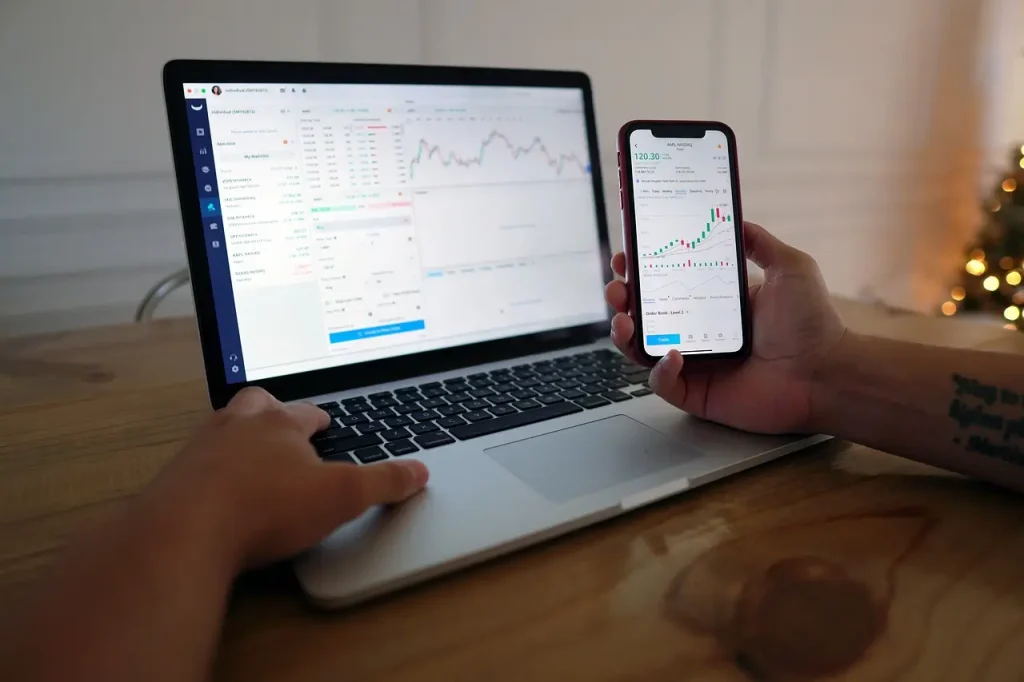
I’ve been trading gold (XAUUSD) for over five years, and I still see the same mistake everywhere: traders treating gold like a lottery ticket, maxing out leverage on every setup.
Here’s what nobody tells you. Lower leverage on gold actually leads to higher profits long-term. Sounds backwards, but gold’s volatility spikes can wipe out overleveraged accounts in minutes, while conservative position sizing lets you survive drawdowns and compound gains.
This guide breaks down six strategies that work in 2026’s market conditions, from scalping London session volatility to swing trading Fed policy pivots. Each one includes specific entry rules, risk parameters, and the technical setups I actually use.
What Is XAUUSD and Why Trade Gold as a CFD?
XAUUSD represents the price of one troy ounce of gold in U.S. dollars. It’s the most liquid gold trading pair, with daily volume exceeding $180 billion.
Trading gold as a CFD (Contract for Difference) means you’re speculating on price movements without owning physical metal. You get 24/5 market access across London, New York, and Asian sessions, leverage up to 1:500 on some brokers, and spreads as tight as 0.0 points during peak liquidity.
No storage costs, no insurance, no delivery logistics. Just pure price exposure with instant execution.
What Drives Gold Prices and When Should You Trade XAUUSD?
Gold prices move on four main drivers:
Inflation expectations – When inflation rises, gold strengthens as a hedge against currency devaluation. CPI prints and inflation forecasts directly impact XAUUSD momentum.
Federal Reserve policy – Rate hikes typically pressure gold lower (higher rates increase the opportunity cost of holding non-yielding assets), while rate cuts or dovish pivots send gold higher.
U.S. dollar strength – Gold and the dollar move inversely. A stronger DXY (Dollar Index) usually means lower gold prices, and vice versa.
Geopolitical events – Wars, banking crises, and political instability drive safe-haven demand. Gold spikes during uncertainty as investors flee risk assets.
Best times to trade XAUUSD:
London session (8 AM – 12 PM GMT): Gold sees its highest volatility during European market hours. Major moves often happen here as institutional traders react to overnight news and position for New York open.
New York session (1 PM – 5 PM GMT): The overlap with London creates peak liquidity. U.S. economic data releases (CPI, NFP, FOMC) drop during this window, triggering 50-100 point moves in minutes.
Avoid the Asian session (11 PM – 3 AM GMT): Gold typically drifts sideways with thin volume during Asian hours. Spreads widen and price moves become unpredictable. Unless you’re specifically trading Tokyo or Sydney news events, skip this session.
Which Technical Indicators Work Best for Gold Trading?
The most effective technical indicators for gold trading include Moving Averages for trend identification, RSI for overbought/oversold conditions, MACD for momentum shifts, and Bollinger Bands for volatility-based entries.
Moving Averages (50 EMA + 200 EMA)
Use the 50-period and 200-period exponential moving averages to identify trend direction. When the 50 EMA crosses above the 200 EMA (golden cross), it signals bullish momentum. When it crosses below (death cross), expect bearish pressure.
For intraday gold trading, switch to 20 EMA and 50 EMA on the 15-minute or 1-hour chart. Price bouncing off the 20 EMA during an uptrend offers low-risk entry points.
RSI (14-period, 30/70 levels)
Set RSI to 14 periods with overbought at 70 and oversold at 30. Gold often respects these levels during range-bound conditions.
6 Proven Gold Trading Strategies for XAUUSD
These six strategies cover different market conditions and trading styles. Each includes specific entry/exit rules, stop loss placement, and when to deploy them on XAUUSD.
Trend-Following Strategy
Trend-following strategy identifies gold’s directional momentum using technical indicators, then enters on pullbacks to ride the prevailing trend until reversal signals appear.
Setup Requirements
Use the 50 EMA and 200 EMA on the daily chart to identify the primary trend. When the 50 EMA is above the 200 EMA, the trend is bullish. When it’s below, the trend is bearish.
Add ADX (14-period) to confirm trend strength. Only trade when ADX is above 25, which indicates a strong directional move. ADX below 20 means the market is ranging, not trending.
Entry Rules
Wait for a pullback to the 50 EMA during an established trend. In an uptrend, enter long when price touches or slightly breaks below the 50 EMA, then closes back above it. In a downtrend, enter short when price touches or slightly breaks above the 50 EMA, then closes back below it.
Identifying the Trend with Moving Averages
One common mistake is entering trades every time price touches the 50 EMA without confirming the trend is actually strong. This leads to getting chopped up in sideways markets where price crosses back and forth over the moving average.
Before entering on a pullback, check that the 50 EMA and 200 EMA are clearly separated (at least 50-100 points apart on the daily chart for gold). If they’re converging or crossing, the market is transitioning between trends—not the time to trade pullbacks.
Entry Rules: Pullbacks and Retracements
The most common mistake is entering too early during a pullback, jumping in the moment price starts retracing without waiting for confirmation that the pullback has actually completed. This often results in getting stopped out as price continues deeper into the retracement zone.
Instead of entering immediately when price touches a support level or Fibonacci retracement, wait for a reversal candlestick pattern to form first. Look for a bullish engulfing candle, hammer, or morning star at the 50% or 61.8% Fibonacci level during an uptrend. For downtrends, wait for bearish engulfing or shooting star patterns at those same retracement levels.
Breakout Trading Strategy
Breakout trading captures gold’s explosive price moves when it breaks through key support or resistance levels with strong volume confirmation to avoid false signals.
How it works:
Gold often consolidates in tight ranges before making significant directional moves. Identify these consolidation zones using horizontal support/resistance levels from previous swing highs/lows, or chart patterns like triangles, flags, and rectangles.
Identifying High-Probability Breakout Zones
The biggest mistake traders make is entering every breakout without filtering for quality. Not all breakouts are equal – trading every resistance break or support breakdown leads to getting caught in false breakouts and whipsaw losses.
High-probability breakout zones share specific characteristics. Look for consolidation periods lasting at least 5-10 candles where price has tested the same support or resistance level multiple times. The more times price touches a level without breaking it, the stronger the eventual breakout tends to be.
Confirming the Breakout and Avoiding False Signals
Many traders lose money by entering the moment price touches a breakout level, only to watch it reverse seconds later. The mistake is not waiting for proper confirmation before committing capital.
Wait for candle close confirmation. Don’t enter mid-candle when price spikes through resistance or support. Wait for the 1-hour or 4-hour candle to fully close beyond the breakout level. This filters out temporary spikes and wicks that quickly reverse.
Range Trading Strategy (Mean Reversion)
Range trading profits from gold oscillating between established support and resistance levels. When gold isn’t trending, it often trades sideways in a range – bouncing predictably between the same price zones.
Identify the range using horizontal support and resistance levels. Look for swing highs that form a resistance ceiling and swing lows that create a support floor. Draw horizontal lines connecting at least 2-3 touches at each level. The more times price bounces off these levels without breaking through, the stronger the range.
News Trading Strategy
News trading involves taking positions around high-impact economic releases like CPI, FOMC, and NFP that create sharp volatility in gold prices. Most traders should avoid trading during the actual news release due to extreme risks that even experienced traders struggle with.
Why news trading is dangerous: During the first 1-2 minutes after major news, spreads can widen from 3-5 points to 20-50 points, stop losses often get slipped by 10-20 points beyond your set level, and price can whipsaw violently in both directions within seconds. Emotional decisions during this chaos lead to impulsive entries and revenge trading.
Which News Events Move Gold the Most?
1. Federal Reserve (FOMC) Interest Rate Decisions
The Fed’s rate decisions are gold’s biggest mover. When the Fed raises rates, gold typically drops because higher interest rates increase the opportunity cost of holding non-yielding gold – investors can earn better returns in bonds or savings accounts. When the Fed cuts rates or signals a dovish stance, gold usually rallies.
Typical reaction: A 0.25% rate hike can push gold down $20-40 in minutes. A surprise dovish statement can trigger $30-60 rallies. In March 2023, when the Fed paused rate hikes amid banking stress, gold surged from $1,930 to $2,050 in two weeks.
2. U.S. Consumer Price Index (CPI)
CPI measures inflation, and gold is the classic inflation hedge. Higher-than-expected inflation often sends gold higher as investors seek protection from currency devaluation. Lower inflation can pressure gold if it reduces the need for Fed rate cuts.
Pre-Release vs. Post-Release Entry Tactics
Post-release entry (safer default for most traders): Wait 15-30 minutes after the news release for the initial volatility spike to settle and spreads to normalize. Watch which direction gold commits to—if it breaks above resistance and holds with follow-through, that’s your bullish signal. If it breaks below support and stays there, that’s bearish confirmation.
Enter once the trend direction becomes clear. You’re sacrificing the first explosive move, but you’re avoiding the chaos of widened spreads (20-50 points), stop loss slippage, and the whipsaw that traps early entries. This approach works well for the March 2023 FOMC decision – traders who waited 20 minutes after the dovish statement could enter the $1,950 breakout with normal 3-5 point spreads instead of fighting 30+ point spreads during the initial spike.
Scalping Strategy for Quick Profits
Scalping gold means taking quick trades that last 1-15 minutes, targeting small 5-15 point profits multiple times per day. You’re capitalizing on short-term price fluctuations during high-liquidity periods when spreads are tight and momentum is clear.
Best timeframes: 1-minute and 5-minute charts. The 1-minute shows you immediate price action and entry precision. The 5-minute confirms the short-term trend direction—only scalp in the direction the 5-minute chart is moving.
When to scalp gold:
- London session open (8:00-11:00 AM GMT) and New York open (1:00-4:00 PM GMT) when volume is highest
- Avoid scalping during major news releases—the spread widening and whipsaw will destroy your edge
- Look for tight spreads (3-5 points maximum)—if your broker’s spread hits 8-10 points, scalping becomes unprofitable
Entry rules:
Use the 5-minute chart to identify trend direction. If the 5-minute shows gold breaking above the 20 EMA with momentum, you’re looking for long scalps only. If it’s below the 20 EMA and falling, short scalps only.
Moving Average Crossover Strategy
Moving average crossovers signal trend changes by showing when a faster MA crosses above or below a slower MA. For gold, you can use two setups depending on your trading timeframe: the 20/50 EMA for faster intraday signals, or the 50/200 SMA for longer-term swing trades.
20/50 EMA crossover (intraday/swing trades on 1H-4H charts):
The 20 EMA reacts quickly to price changes, while the 50 EMA smooths out noise and confirms the trend. When the 20 EMA crosses above the 50 EMA, it signals bullish momentum—gold is shifting from a downtrend or consolidation into an uptrend. When the 20 EMA crosses below the 50 EMA, it signals bearish momentum.
Entry rules: Wait for the crossover candle to close (don’t enter mid-candle). On the next candle, enter long if the 20 EMA crossed above the 50 EMA and price is trading above both MAs. Enter short if the 20 EMA crossed below the 50 EMA and price is trading below both MAs.
Add a confirmation filter to reduce false signals: only take the trade if the crossover happens near a key support/resistance level, or if RSI confirms momentum (RSI above 50 for longs, below 50 for shorts).
Exit rules: Exit when the MAs cross back in the opposite direction, or use a trailing stop that moves with the 20 EMA – if price closes below the 20 EMA on a long trade, exit immediately.
How to Choose the Right Gold Trading Strategy for You
Choose your gold trading strategy based on three factors: your available trading time, your risk tolerance and account size, and the current market conditions. Each of the 6 strategies you just learned works best under different circumstances – here’s how to match the right one to your situation.
Trading time availability:
Full-time traders (6+ hours/day): Scalping and news trading work best. You can monitor 1-minute to 15-minute charts, react to economic releases in real-time, and take 5-10 trades per session during London and New York hours.
Part-time traders (1-2 hours/day): Trend-following and moving average crossover strategies fit your schedule. Check the 4-hour chart once in the morning and once in the evening. Set alerts for crossovers or trendline breaks, then execute trades when signals appear.
Swing traders (15-30 minutes/day): Range trading and breakout strategies work on the daily chart. Check gold once per day, identify support/resistance zones, and set pending orders at key levels. Your trades last 2-7 days, so you’re not glued to the screen.
Risk Tolerance and Account Size
Smaller accounts under $1,000 should use range trading or trend-following with tight stops, while larger accounts can handle news trading and scalping that require wider stop-losses and tolerate higher volatility.
Adapting to Current Market Conditions
Gold’s market personality changes based on macroeconomic conditions, and adapting your strategy to match the current environment is how you stay profitable. Here’s how to recognize shifts and adjust your approach with specific signals.
Trending markets (use trend-following, moving averages, breakout strategies):
Gold trends when there’s a clear macro catalyst pushing price in one direction. The 2024 rally from $2,020 in January to $2,450 by May happened because the Fed signaled rate cuts and geopolitical tensions (Middle East, Ukraine) increased safe-haven demand. During these periods, trend-following strategies with the 20/50 EMA or moving average crossovers produce the best risk-reward.
How to identify: Look at the daily chart. If gold is making consecutive higher highs and higher lows (uptrend) or lower highs and lower lows (downtrend) for 2+ weeks, the market is trending. Check the ADX indicator – if ADX is above 25 and rising, the trend has momentum. Also watch for directional news flow: Fed policy shifts, inflation data surprises, or major geopolitical events typically drive trends.
What to trade: Use the 20/50 EMA crossover strategy on the 4-hour chart, or trade breakouts when gold breaks above recent swing highs (in an uptrend) or below swing lows (in a downtrend). Set your stop loss below the most recent higher low (uptrend) or above the most recent lower high (downtrend).
Ranging markets (use range trading, support/resistance strategies):
Gold ranges when there’s no clear macro catalyst and traders are waiting for the next major data release or policy decision. This happened in mid-2024 when gold traded between $2,300-$2,400 for nearly two months as markets waited for Fed clarity on rate cuts. Price bounces between established support and resistance levels with no sustained breakouts.
How to identify: On the daily chart, gold makes equal highs and equal lows, creating a horizontal channel. The ADX indicator stays below 20, signaling weak trend strength. Price tests the same support and resistance levels multiple times without breaking through. News flow is quiet with no major catalysts.
What to trade: Use range trading strategy. Buy at support zones (lower boundary of the range) and sell at resistance zones (upper boundary). Place stop-losses 20-30 points outside the range boundaries. Target the opposite side of the range for profits. Exit all positions if price breaks the range with strong volume – that signals a new trend is starting.
Risk Management for Gold Trading
Gold’s volatility makes risk management non-negotiable. A 50-point move in XAUUSD can swing your account by 5-10% with moderate leverage, and a single uncontrolled loss can wipe out weeks of gains.
The difference between profitable gold traders and those who blow accounts comes down to three rules: never risk more than 1-2% per trade, place stop-losses based on technical structure (not arbitrary point distances), and use leverage conservatively regardless of what your broker allows.
Here’s how to implement each rule with specific parameters for XAUUSD trading.
Position Sizing and Risk Per Trade
The 1-2% rule is your safety net in gold trading. Risk more than that on a single trade, and a few bad days can wipe out weeks of progress.
Here’s what that looks like in practice: If you have a $10,000 account, you risk $100-$200 per trade maximum. That means if your stop-loss gets hit, you lose no more than that amount.
How to calculate your position size:
- Decide your risk amount: $10,000 account × 1% = $100 risk per trade
- Measure your stop-loss distance in points: If you’re entering at $4,050 with a stop at $4,030, that’s 20 points ($2.00)
- Calculate position size: $100 risk ÷ $2.00 stop distance = 0.05 lots (5 micro lots)
Most brokers show point value when you adjust lot size. For XAUUSD, 0.01 lots = $0.10 per point, 0.1 lots = $1 per point, and 1.0 lot = $10 per point. Use a position size calculator if your broker doesn’t display this automatically.
Where to Place Stop-Loss Orders
Place stop-losses slightly below support levels for buy trades or above resistance for sell trades. Alternatively, position them behind the first candle or previous swing points to avoid premature exits.
Using Leverage Safely in XAUUSD Trading
Leverage amplifies both your gains and losses. In gold trading, where 50-100 point swings happen regularly, using too much leverage turns manageable losses into account-ending disasters.
Recommended leverage by skill level:
- Beginners (0-6 months): 1:10 to 1:20 maximum. You’re still learning to read gold’s volatility patterns and manage emotions during drawdowns.
- Intermediate (6-18 months): 1:20 to 1:50 if you have a tested strategy with consistent results over 50+ trades.
- Advanced (18+ months): 1:50 to 1:100 only if you have strict risk management discipline and proven profitability.
Most brokers offer 1:500 or even 1:1000 leverage for gold. That’s not a feature, it’s a trap. A 50-point move against you with 1:500 leverage can wipe out 50% of your account if you’re trading a full lot. The same move with 1:20 leverage costs you about 10%.
Most brokers offer 1:500 leverage on gold, but using maximum leverage is how accounts get wiped out. A 0.2% move against you with 500:1 leverage equals a 100% account loss.
Safe leverage for gold depends on your stop-loss distance and account size. Here’s the practical approach:
For swing traders (4H-daily charts, 40-80 point stops): Use 1:50 to 1:100 leverage maximum. This gives you enough margin to hold positions through normal volatility without risking more than 2% per trade.
For day traders (1H charts, 20-40 point stops): Use 1:100 to 1:200 leverage. Tighter stops mean you can use slightly higher leverage while maintaining safe risk levels.
For scalpers (1-5 min charts, 10-20 point stops): Use 1:200 to 1:300 leverage maximum. Even with tight stops, going beyond 300:1 leaves no room for spread costs and slippage.
Never use leverage to increase position size beyond your 1-2% risk rule. If your calculated position size is 0.05 lots with 1:100 leverage, don’t bump it to 0.5 lots just because your broker offers 1:500. Leverage should cover margin requirements, not amplify risk.
Common Mistakes and How to Optimize Your Gold Trading
Even experienced traders make preventable errors that erode profits in gold trading. This section covers the most costly mistakes and practical ways to refine your approach over time.
Backtest before you trade live
Before risking real money on a new strategy or indicator combination, backtest it on at least 100 trades across different market conditions (trending, ranging, high volatility, low volatility).
MT5 has a built-in strategy tester. Set it to the last 6-12 months of XAUUSD data, run your strategy, and check if it would’ve been profitable after spreads and commissions. If it loses money in backtesting, it’ll definitely lose money live.
Manual backtesting works too. Scroll back on your charts, mark where your strategy would’ve triggered entries, measure the outcomes, and calculate win rate and average risk/reward. It’s slower but forces you to understand whysetups win or lose.
Track these performance metrics
Four metrics tell you if you’re improving or fooling yourself:
- Win rate: Percentage of trades that hit profit target. 50%+ is healthy for most strategies, but meaningless without risk/reward context.
- Average risk/reward ratio: Total profit from winners divided by total loss from losers. Aim for 1.5:1 minimum. A 45% win rate with 2:1 risk/reward is profitable.
- Profit factor: Gross profit divided by gross loss. Above 1.5 means your strategy has a real edge. Below 1.2 means you’re barely breaking even after costs.
- Maximum drawdown: Largest peak-to-trough loss during a losing streak. If your max drawdown is 25% and you risk 2% per trade, you survived a 12-trade losing streak. Can your psychology handle that?
Review these monthly. If your win rate drops 10%+ or your average risk/reward falls below 1:1, pause live trading and backtest recent trades to find what changed.
How to Optimize Your Gold Trading Over Time
Trading gold profitably isn’t about finding the perfect strategy. It’s about refining what works, eliminating what doesn’t, and adapting as market conditions change.
The difference between breakeven traders and consistently profitable ones isn’t strategy complexity. It’s the discipline to track performance, identify patterns in losses, and make small adjustments over time.
Keep a focused trading journal
Most traders either skip journaling entirely or track meaningless fluff like “felt confident” or “market looked bullish.” Neither helps.
Track these five data points for every trade:
- Strategy used (breakout, range, trend-following)
- Session traded (Asian, London overlap, New York)
- Economic events within 2 hours of entry
- Actual risk-to-reward ratio at exit
- What invalidated your thesis (if it was a loss)
Review monthly. Look for patterns. If 70% of your losses happen during Asian session, stop trading then. If breakout trades during London open have a 65% win rate but range trades have 40%, adjust your focus.
Backtest before you risk real money
Most platforms have built-in backtesting tools. Use them to test a strategy over 100+ trades before going live.
For manual backtesting, scroll back on your charts and mark entries/exits based on your rules. Track the same five data points you’d track in live trading. If you can’t get 100 trades in 6 months of historical data, your strategy triggers too rarely to be practical.
Backtesting shows you if a strategy has an edge. It doesn’t guarantee future results, but it prevents you from trading random setups with no statistical foundation.
Track four key performance metrics
Win rate: Percentage of winning trades. For gold, anything above 50% is solid if your risk-to-reward is at least 1:1.5. Lower win rates (40-45%) can work if you’re consistently hitting 1:2 or better on winners.
Risk-to-reward ratio: Average profit per winner divided by average loss per loser. Aim for 1:2 minimum. If you’re risking 30 points to make 40 points (1:1.33), you need a 60%+ win rate just to break even after spreads.
Profit factor: Total profit divided by total loss. Anything above 1.5 means you’re profitable. Below 1.2 means you’re one bad week from drawdown.
Maximum drawdown: Largest peak-to-valley drop in account balance. If you drop 30% during a losing streak, you need a 43% gain just to recover. Keep max drawdown under 15% by cutting position sizes during rough patches.
Check these monthly. If profit factor drops below 1.3 for two months straight, something changed. Either market conditions shifted or you’re deviating from your rules.
Costly Mistakes That Kill Gold Trading Accounts
Overtrading and excessive leverage
Gold’s volatility tempts traders to overtrade or use excessive leverage. Taking 5-10 positions a day or using 1:500 leverage on a $1,000 account means one bad trade can wipe out weeks of gains.
Stick to 1-3 high-probability setups per day. Use leverage conservatively (1:50 to 1:100 max) and never risk more than 2% of your account on a single trade.
Ignoring fundamentals and economic news
Gold reacts violently to Fed announcements, inflation data, and geopolitical shocks. Trading through a FOMC meeting or NFP release without adjusting your strategy is like driving blindfolded.
Check the economic calendar daily. Avoid entering new positions 30 minutes before high-impact news. If you’re already in a trade, either close it or widen your stop-loss to account for increased volatility.
Revenge trading after losses
Losing $200 on a bad trade, then immediately opening three more positions to “win it back” destroys accounts faster than anything else. Emotional trading ignores your rules and compounds losses.
After two consecutive losses, stop trading for the day. Walk away. Your strategy doesn’t change because you’re frustrated.
Trading without a stop-loss
Some traders skip stop-losses hoping gold will “come back.” It often doesn’t. A 50-point move against you on a standard lot is $500 gone. Without a stop, one bad trade can wipe out your account.
Every trade needs a stop-loss placed before you enter. No exceptions. Use technical levels (support/resistance) or ATR-based stops, but always define your maximum loss upfront.
How to Refine Your Strategy Over Time
Most traders skip the refinement step and wonder why their strategy stops working after a few weeks. The difference between a strategy that works once and one that works consistently is systematic testing and adjustment.
Start with demo account forward testing
Execute Your Gold Strategy with VantoTrade’s Precision Tools
You’ve got the strategies. Now you need the execution speed and pricing to make them work.
VantoTrade gives you raw spreads on XAUUSD starting from 0.0 points with transparent commission pricing. Your orders execute in milliseconds through MetaTrader 5, with leverage up to 1:500 and flexible position sizing from 0.01 lots.
You get same-day withdrawal processing, and funding options that include cards, wire transfers, and crypto.
Standard Account: Commission-free with spreads from 1.4 points. Good for swing traders and position traders who hold multi-day positions.
Raw Account: Spreads from 0.0 points with competitive commission. Built for scalpers, day traders, and anyone who needs the tightest pricing on every entry.
Minimum deposit is $25. Verification takes under 60 seconds. You can start trading gold today.
Frequently Asked Questions About Gold Trading Strategies
What is the best strategy for gold?
There’s no single “best” strategy for gold. The right approach depends on your trading style, risk tolerance, and time commitment.
Trend-following works well during strong directional moves driven by macroeconomic shifts. Breakout trading captures explosive moves when gold breaks key support or resistance levels. Range trading profits from gold’s tendency to bounce between defined levels during consolidation.
Scalpers who can watch charts full-time during London or New York sessions often use 5-minute breakouts or moving average crossovers. Swing traders who check charts once or twice daily typically use trend-following on 4-hour or daily timeframes.
Test multiple strategies on a demo account for at least 100 trades each. Track win rate, risk-to-reward ratio, and profit factor. The strategy that matches your schedule and produces consistent results is the best one for you.
What is gold strategy?
A gold strategy is a set of rules that tells you when to enter and exit XAUUSD trades based on price action, technical indicators, or fundamental events.
Every strategy defines three core elements: entry conditions (what chart pattern or signal triggers a trade), exit conditions (where you take profit and cut losses), and position sizing (how much capital you risk per trade).
For example, a simple trend-following gold strategy might be: Enter long when price crosses above the 50 EMA on the 4-hour chart with RSI above 50. Place stop-loss 20 points below the swing low. Take profit at 1:2 risk-to-reward ratio. Risk 1% of account per trade.
The strategy removes emotion from trading decisions. You follow the rules regardless of how you feel about the market.
What is the 5 3 1 rule in trading?
The 5-3-1 rule is a focus framework that helps traders avoid overcomplication and strategy-hopping.
It means: Focus on 5 currency pairs (or instruments), master 3 trading strategies, and trade during 1 specific time session.
For gold traders, this might look like: Trade XAUUSD, EURUSD, GBPUSD, USDJPY, and DXY (to gauge dollar strength). Use trend-following, breakout, and range strategies. Focus on the London session (8:00-12:00 GMT) when gold volatility and liquidity peak.
The rule prevents you from jumping between 20 different pairs, testing a new strategy every week, and trading random setups at 3 AM when spreads are wide and liquidity is thin.
Narrowing your focus lets you recognize patterns faster and refine execution. You become an expert in a few setups instead of mediocre at dozens.
How much capital do I need to start trading gold?
You can start trading gold with as little as $100, but $500-$1,000 gives you better risk management flexibility.
With $100 and 1% risk per trade, you’re risking $1 per trade. On XAUUSD with 30-point stops, that means trading 0.003 lots (3 micro lots). It works, but one week of losses can set you back significantly.
With $500 and 1% risk, you can risk $5 per trade. That’s 0.016 lots with 30-point stops, giving you room for 20 consecutive losses before you’re down 20%. More breathing room means less emotional pressure.
With $1,000, you can comfortably risk 1-2% per trade and survive normal losing streaks without significant drawdown. You can also diversify across 2-3 positions if your strategy calls for it.
Start with what you can afford to lose completely. Use demo accounts until your strategy shows consistent profitability over 100+ trades. Don’t fund a live account hoping to “figure it out” with real money.