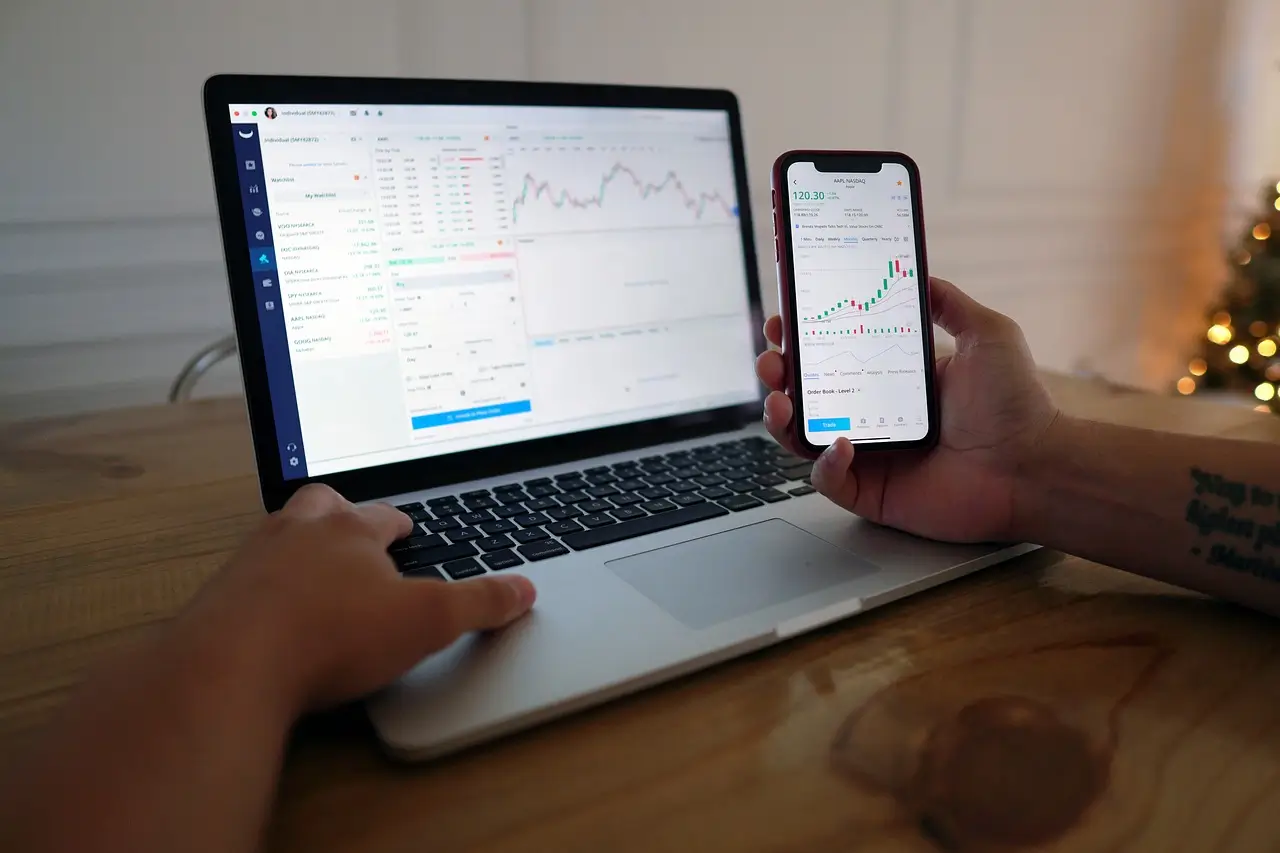
This trend-pullback workflow captures multi-day moves on XAU/USD with controlled risk.
This guide breaks down a trend pullback approach for intermediate swing traders. The core method: trade with the daily trend, enter on pullbacks and continuations.
The workflow uses D1 market structure for trend direction, daily swing highs and lows for key levels, and a 4H break-and-close for entry triggers.
Risk stays at 1% per trade with structure-based stops beyond the swing point. Targets sit at the next daily swing level.
Why XAU/USD Is a Natural Fit for Swing Trading
Gold's macro sensitivity creates exactly the kind of swing setups that trend-pullback traders look for. When sentiment shifts or safe-haven flows kick in, XAU/USD doesn't creep. It moves from one technical level to another in clear, tradeable waves.
Macro shifts drive swing-tradeable patterns. Gold reacts quickly to economic data, geopolitical tension, and liquidity positioning. Even during low-news weeks, sentiment shifts can trigger powerful moves between daily swing highs and lows.
These moves create the structure swing traders need: clear support and resistance levels, defined trends on the daily chart, and pullbacks that offer entry opportunities without requiring constant chart monitoring.
Swing trading fits around your schedule. You can analyze the market and place trades in the evening rather than watching charts all day (many traders also use a Forex VPS to keep MT5 running reliably while they're away). For traders with jobs or other commitments, this matters.
The slower pace also reduces psychological stress. With 1% risk per trade and structure-based stops beyond the swing point, you're not reacting to every tick. Fewer impulsive decisions, better execution.
Platform requirements are straightforward. You need clean 4H and daily charts, the ability to set pending orders, and reliable execution on metals.
MT5 handles gold swing trading well. VantoTrade Standard Account offers spreads from 1.4 pips on metals with commission-free trading, which keeps costs manageable when holding positions for several days.
What Moves Gold Prices?
Gold prices are driven by the U.S. dollar strength, real interest rates, inflation expectations, risk sentiment, and geopolitical events-if you're weighing metals, see our guide on gold vs silver. When the dollar weakens or real yields drop, gold typically rises.
Three macro factors drive gold prices for swing traders:
- U.S. Dollar (DXY) moves inversely with gold. When the dollar weakens, gold typically rises.
- Real interest rates (US10Y minus inflation) matter most. Lower real yields make gold more attractive versus yield-bearing assets.
- Risk sentiment pushes gold higher in risk-off environments like recession fears or geopolitical tension.
US CPI, NFP, and FOMC meetings create the largest gold moves. Treasury yield announcements and geopolitical headlines (sanctions, central bank gold purchases) also trigger significant swings.
Practical rule: Avoid entering new positions on these event days. The volatility looks like opportunity, but it's noise. Wait for the dust to settle, then trade the direction.
How to Build a Swing Trade Setup on Gold
Building a swing trade setup on gold follows a 5-step workflow: identify the daily trend, mark key support/resistance levels, wait for an entry trigger on the 4-hour chart, set your stop-loss and take-profit, then size the position based on risk (for more methods, see our full XAUUSD trading strategy guide). This multi-timeframe approach combines structure with disciplined execution.
Use two timeframes: daily (D1) for trend context and 4-hour (4H) for entry timing. The daily chart tells you which direction to trade. The 4H shows you when to pull the trigger.
Most traders run TradingView for analysis and MT5 for execution. Keep them separate. TradingView handles clean markup, MT5 handles orders.
The analysis itself is fast. Mark your daily structure, identify liquidity zones, set alerts on 4H. Maybe 15 minutes of actual work.
The waiting is the hard part. You need a break and close on 4H as your trigger, and price doesn't care about your schedule. Setups can take hours to days to form. Risk 1% per trade and let patience do the rest.
Step 1: Identify the Trend on the Daily Chart
Forget indicators for trend identification. Use market structure instead.
On the daily chart, you're looking for one of two patterns: higher highs and higher lows (uptrend) or lower highs and lower lows (downtrend). Pure price action, no lagging signals.
Uptrend: Price forms higher highs (HH) and higher lows (HL). Each swing low stays above the previous low.
Downtrend: Price forms lower highs (LH) and lower lows (LL). Each swing high fails to reach the previous high.
If you can't clearly see this pattern, the trend isn't established yet.
Identify the 3-5 most recent D1 swing points, the obvious pivots where price reversed.
Mark them with horizontal lines at each swing high and swing low. These become your primary reference levels for the entire strategy.
When price oscillates without clear HH/HL or LH/LL structure, the market is ranging.
Two options:
- Skip the setup and wait for a breakout that establishes direction
- Trade range boundaries if you have a separate range strategy
This strategy works best with defined trends. When in doubt, stay out.
Step 2: Mark the Range and Key Levels
Open your D1 chart and mark the daily swing highs and lows with horizontal lines. These become your key levels for the trade.
D1 swing points define your range boundaries and take-profit targets. The next daily swing level above or below price is where you'll look to exit.
A valid trading range forms near a key level like an Order Block or Supply/Demand zone. Look for clear swing highs and swing lows on the daily chart that create obvious boundaries.
Also mark external liquidity zones: previous major highs and lows where stops are likely sitting.
Draw horizontal lines at each daily swing high and swing low. These are your D1 support and resistance levels.
Your take-profit target is the next D1 swing level in your trade direction. Prior swing highs/lows or Fibonacci retracements work as target zones.
Use color coding to separate timeframes. Mark D1 swing points in one color (like white or yellow), then switch to H4 and mark those swings in a different color (like blue).
D1 levels are your primary structure for breakouts and rejections. H4 levels provide precision entry points within the larger range.
Step 3: Wait for Your Entry Trigger on 4H
Your 4H entry isn't about catching breakouts. It's about waiting for price to pull back to your key level, then confirming with a break + close.
A wick touching your level means nothing. You need a full candle close beyond the level to confirm the move. This single rule filters out most false signals.
What rejection patterns confirm a valid entry?
Look for these at your retest level:
- Pin bars with long wicks showing clear rejection
- Engulfing candles that close decisively in your direction
- A sweep of the daily level followed by momentum back into the trend
The pattern matters less than the close. If the candle hasn't closed, you don't have confirmation yet.
When should I enter on a breakout instead?
This approach doesn't use breakout entries. You're trading pullbacks with the daily trend, not chasing momentum.
After seeing a bullish daily candle near support, switch to the 4H to find your pullback entry. Wait for price to retrace, then look for your break + close confirmation in the trend direction.
How do I avoid false signals on the 4H?
Require candle close confirmation on every entry. No exceptions.
A wick breaking your level then snapping back is a false signal. A full candle body closing beyond the level is real. This distinction alone saves you from most fakeouts.
Step 4: Set Your Stop-Loss and Take-Profit
Risk management separates profitable gold traders from the rest. Your stop-loss and take-profit levels determine whether a good entry becomes a winning trade or an unnecessary loss.
Place your stop-loss beyond the swing point, not at the signal candle. Structure-based stops use the pullback swing high (for shorts) or swing low (for longs) as your reference.
This approach gives your trade room to breathe. If price breaks the swing structure, your trade thesis is invalidated anyway.
Target the next daily swing level for your take-profit. Look left on your D1 chart and identify the nearest swing high or swing low in your trade direction.
Daily swing levels act as natural magnets for price. When gold reaches these D1 support/resistance zones, expect reactions from other traders watching the same levels.
Consider taking partial profits at intermediate levels:
- 50% at first resistance/support before your final target
- Remaining 50% trails to the daily swing level
- Move stop to breakeven after first partial
Trailing stops work well on extended moves. After a 250-point gain, trail your stop below each new swing low (for longs) to lock in profits while staying in the trend.
Spread directly affects your effective stop distance. Factor it into your calculations before placing the order.
VantoTrade spread options:
- Raw Account: from 0.0 pips + $3.5 commission per $100,000
- Standard Account: from 1.4 pips, commission-free
With a 1.4 pip spread, add roughly $1.40 per standard lot to your stop distance. On tight stops, the Raw Account's lower spread often makes more sense despite the commission.
Step 5: Size the Position
Position sizing protects your account from outsized losses. The math is simple once you know your stop distance.
How do I calculate my dollar risk per trade?
With a 1% risk rule, multiply your account balance by 0.01. A $5,000 account means $50 at risk per trade.
This stays constant regardless of the setup. Your stop-loss distance determines position size, not the other way around.
What is the pip value for XAU/USD?
For gold, one pip ($0.01 move) equals:
- $0.10 per 0.01 lot (micro)
- $1.00 per 0.10 lot (mini)
If your stop-loss is $5 away and you're risking $50: divide $50 by $5 = 0.10 lots.
Does my margin support this position size?
VantoTrade offers up to 1:500 leverage on commodities with a 50% stop-out level. Higher leverage means less margin tied up per trade.
Always check that your free margin covers the position before clicking buy. Structure-based stops beyond swing points need room to breathe.
Check Spread and Execution Before You Enter
Spreads eat into your stop distance. Before entering any gold swing trade, check current spread conditions and factor the cost into your position.
VantoTrade offers two spread structures for XAU/USD:
- Standard Account: Spreads from 1.4 pips, commission-free
- Raw Account: Spreads from 0.0 pips + $3.5 per $100k traded
The math matters for swing entries. On a 50-pip stop, a 1.5-pip spread costs you 3% of your stop distance. On a tighter 15-pip stop, that same spread jumps to 10%.
For swing trades with wider stops, the Standard Account keeps things simple. If you're running tighter entries, calculate whether Raw saves you money at your typical position size.
Since you monitor multiple sessions, here's when to watch for wider spreads:
- Asian session: Gold liquidity drops significantly. Spreads can double or triple.
- Session transitions: The daily close at 5pm EST and reopening see temporary widening.
- News releases: NFP and FOMC announcements spike spreads for 5-15 minutes.
Check spreads before clicking buy. A setup that looks good at London open might cost you less than the same setup during Asian hours.
In MT5 Market Watch, right-click XAU/USD and select Depth of Market. This shows real-time bid/ask spread and available liquidity at each price level.
Make this part of your pre-entry routine. If spread looks unusually wide, wait 5-10 minutes or check if news is about to drop.
One more thing: VantoTrade's stop out level sits at 30% for both account types. Factor this into your position sizing, especially on volatile swing setups.
Risk Management and Common Mistakes in Gold Swing Trading
Gold can swing $5 to $10 in under 2 minutes. With leverage at 100:1, that $10 move on a 1-lot position equals $1,000 in P&L. This makes disciplined position sizing non-negotiable.
Why gold demands tighter risk controls
Gold moves faster than most forex pairs. A $5 to $10 spike can hit your stop before you react, especially during high-impact news.
At 100:1 leverage, even a modest position turns small price moves into significant account swings.
The 1% rule
Risk 1% of your account per trade. This keeps you in the game after a losing streak.
Never rely on mental stops. Always use limit orders with clear stop-loss placement.
Common mistakes that blow up accounts
- Emotional entries without confirmation
- Holding oversized positions into FOMC, NFP, or CPI releases
- Using stops too tight relative to gold's normal range
- Trading without a macro bias
The 1% Rule and How to Apply It
Position sizing is where the 1% rule becomes practical. The formula adjusts your lot size based on how far your stop sits from entry.
Position size formula:
(Account Balance × 0.01) ÷ (Stop-Loss in pips × Pip Value)
Example: $10,000 account with a 50-pip stop on XAU/USD:
($10,000 × 0.01) ÷ (50 × $1) = 2 mini lots
Structure-based stops (placed beyond swing points) mean your stop distance varies by setup. The formula automatically adjusts lot size to keep risk at 1%.
Which risk percentage to use
1% works for most setups with normal volatility. Some traders drop to 0.5% during high-volatility periods or when starting out.
The key is consistency: pick your percentage and stick with it across trades.
Adjusting for High-Volatility Sessions
Certain sessions require extra caution. Volatility spikes during predictable windows, and adjusting your approach can prevent unnecessary losses.
High-volatility windows for XAU/USD:
- US market open: 8:30 to 10:00 AM ET
- London/NY overlap
- FOMC announcements, NFP releases, CPI data
VantoTrade's economic calendar flags these events so you can plan position adjustments in advance.
Two approaches to volatility adjustment:
Option 1: Reduce risk percentage
Drop from 1% to 0.5% during high-volatility windows. This keeps your stop distance the same but cuts position size in half.
Option 2: Widen your stop
Keep 1% risk but place your stop further out to accommodate larger swings. The position sizing formula automatically reduces lot size when stop distance increases.
Both work. Option 1 is more conservative. Option 2 gives trades more room to breathe but requires discipline to honor the wider stop.
Overleveraging on Gold (and How to Avoid It)
Gold's volatility makes high leverage particularly dangerous. A $20 move can wipe out an overleveraged account before you can react. Size positions so your stop-loss risk stays within 1-2% of capital, regardless of the leverage your broker offers.
Gold can move $10 to $30 within minutes on major news releases. At high leverage, these moves trigger margin calls before you can react.
Here's the math: At 1:100 leverage, a $15 move against a 1-lot position equals a $1,500 loss. That's more than many retail accounts can absorb from a single trade.
Adjust lot size based on stop-loss distance and gold's specific volatility. Use this formula:
Position size = (Account × Risk %) ÷ (Stop distance in $ × pip value)
Example: Risking 1% of a $10,000 account with a $10 stop means your max size is 1 lot. Wider stops require smaller positions.
Ignoring Macro Events and the Economic Calendar
Gold reacts sharply to US CPI, NFP, and FOMC meetings. Ignoring these events means holding through volatility spikes that can blow past your stops or reverse your trade entirely.
US CPI, NFP, and FOMC meetings drive the sharpest directional moves in gold. Geopolitical headlines can trigger sudden spikes too.
Gold also reacts to:
- USD strength (inverse relationship)
- Treasury yields (competing safe haven)
- General risk sentiment (flight to safety flows)
When the dollar rallies or yields climb, gold typically sells off. When fear spikes, gold catches a bid.
Check the economic calendar before entering any swing trade. High-impact releases can move gold 1-2% in minutes.
If you're holding through CPI or NFP, reduce position size or widen stops. VantoTrade's economic calendar flags these events so you're not caught off guard.
The safest approach: close or hedge before the release, then re-enter once price settles.
Chasing Breakouts Without Confirmation
Gold loves to fake out breakout traders. The market's wick-heavy behavior around key prices creates frequent false moves that trap early entries. Understanding why this happens, and what to wait for, keeps you on the right side of these traps.
Why do gold breakouts fail so often?
Gold's price action around key levels is wick-heavy by nature. Price often spikes through a level, triggers stops, then reverses sharply.
Smart money uses these moments deliberately. They create liquidity sweeps around breakout zones, trapping retail traders who entered on the initial move, then push price the opposite direction. That's not a breakout. That's a trap being set.
What confirmation signals should I wait for?
Your approach is solid: candle close beyond the level. A wick through resistance means nothing. A close through it means something.
Other confirmation signals to stack with candle close:
- Retest of the broken zone as new support/resistance
- Volume spike confirming momentum behind the move
- Higher-timeframe alignment with daily trend direction
Since you trade trend pullbacks with the daily structure, check if the breakout aligns with your higher-timeframe bias before entering on 4H. If daily says up and you're watching an upside breakout, the odds improve.
How do I build patience into my process?
Set alerts at key levels instead of watching price constantly. Let the market come to you rather than forcing entries because you've been staring at charts for an hour.
When a level triggers, wait for the manipulation phase to complete. Trade against the trapped crowd only after the fake move confirms. This means entering on the reaction, not the initial spike.
Your edge comes from letting others get trapped first.
Swing Trading vs Scalping and Day Trading Gold
Swing trading holds XAU/USD positions for days to weeks targeting major price levels. Scalping captures small moves within minutes, while day trading closes all positions before the session ends. Each style demands different time, capital, and risk tolerance.
Swing trading demands the least daily attention. You check charts once or twice a day, set your entries and exits, then step away. The psychological load stays manageable because you're not reacting to every five-minute candle.
Day trading requires full focus during your chosen session. You're watching price action, managing positions, and making decisions under time pressure. The emotional toll is higher, and overtrade risk increases when you're staring at screens for hours.
Scalping adds another layer of intensity. Smaller profit windows mean faster decisions and more stress per trade.
Swing trades use wider stops to give positions room to breathe. You're targeting major levels over days to weeks, so a 50-pip stop might be normal.
Day trading allows tighter stops since you're closing before the session ends. No overnight risk, but you need precision on entries.
Scalping is most sensitive to spreads. When you're targeting 5-10 pips, trading costs matter. VantoTrade Standard Account spreads start from 1.4 pips on metals, which works for swing and day trading but can eat into scalping margins.
| Style | Best For | Time Required | Spread Sensitivity |
|---|---|---|---|
| Swing Trading | Part-time traders, those avoiding PDT rules | 15-30 min/day | Low |
| Day Trading | Full-time traders with dedicated sessions | 2-6 hours/day | Medium |
| Scalping | Experienced traders with fast execution | Continuous during session | High |
If you can't monitor positions constantly, swing trading fits. Holding overnight or longer also sidesteps PDT rule restrictions for US traders with smaller accounts.
Day trading and scalping need dedicated session time and benefit from tighter spreads. These styles suit full-time traders with faster execution setups.
Put Your Gold Swing Trading Plan Into Action on VantoTrade
You have a 5-step swing trading workflow. Now you need a platform that executes it without slippage eating your entries.
VantoTrade offers XAU/USD CFDs with spreads from 0.0 pips on Raw accounts or 1.4 pips on Standard. Execution happens in milliseconds, which matters when gold moves $5 in a minute.
MT5 gives you the charting tools to spot setups and built-in alerts so you can step away while waiting for entry levels.
Start with $25 minimum deposit. Verification takes under 60 seconds, and withdrawals process same-day.
Open an account, fund it, and put your first swing trade on XAU/USD.
Frequently Asked Questions About Swing Trading Gold
What is the golden rule of swing trading?
The golden rule of swing trading gold combines three elements: structure-based stops placed beyond swing points, take-profit targets at the next daily S/R level, and 1% risk per trade.
Gold's average daily range often exceeds 200-300 pips. Tight stops get hunted in this volatility.
A 1:2 risk-reward ratio lets you be wrong 60% of the time and still break even or profit slightly. The math works in your favor over a series of trades.
Place your stop-loss beyond the swing point, not at an arbitrary pip count. This structure-based approach uses the pullback swing as your reference.
For take-profit, target the next D1 swing level. There's no fixed pip distance because structure varies trade to trade.
Check your platform's real-time spreads before trading. Wide spreads can eat into your 1:2 profit target, especially on gold.
Use depth of market tools and one-click trading to verify execution speed before high-impact news events.
How big should my stop-loss be on XAUUSD?
Your stop-loss size depends on market structure, not arbitrary pip counts. Place stops beyond the nearest swing high or low on the daily chart, then use ATR to validate the distance and calculate position size.
Where should the stop be placed on the chart?
Use daily swing highs and lows as your key structural levels. Place your stop beyond the most recent swing point from your pullback entry.
This structure-based approach lets the market's natural rhythm determine your stop distance rather than a fixed pip value.
How do I use ATR to size my stop?
Apply a 14-period ATR on the Daily or H4 chart. A common swing stop sits at 1.5x to 2x the current ATR value.
This gives your trade enough room to breathe through normal volatility while keeping stops at logical structural levels.
How does stop distance affect my position size?
Calculate lot size based on stop distance so you never risk more than 1% to 2% of account equity per trade. Wider stops mean smaller position sizes.
This keeps your risk consistent regardless of whether your stop is 200 pips or 400 pips from entry.
Should I hold gold trades during major economic news?
It depends on your risk tolerance and current position. Major releases like NFP, CPI, and FOMC create significant volatility that can work for or against you.
What are the primary risks of holding through news?
Spread widening is the biggest concern. During NFP, XAU/USD spreads can spike from 1-2 pips to 10-20+ pips, potentially hitting your stop-loss even if price never reaches it.
Slippage compounds the problem. High-speed price gaps can cause stops to execute at significantly worse prices than intended.
When is it acceptable to hold a position?
Some traders use a profit buffer rule: only holding if the trade is already in profit by 2-3x the expected news-driven ATR. This provides cushion against adverse moves.
Others maintain a strict no-trade policy around high-impact events, closing all positions regardless of profit status.
How can I manage risk if I choose to hold?
Check MT5 Market Watch for real-time spread expansion 5 minutes before the release. This gives you a final decision point.
Reducing position size by 50% before the event is another common approach. It limits exposure while still allowing participation in any favorable move.